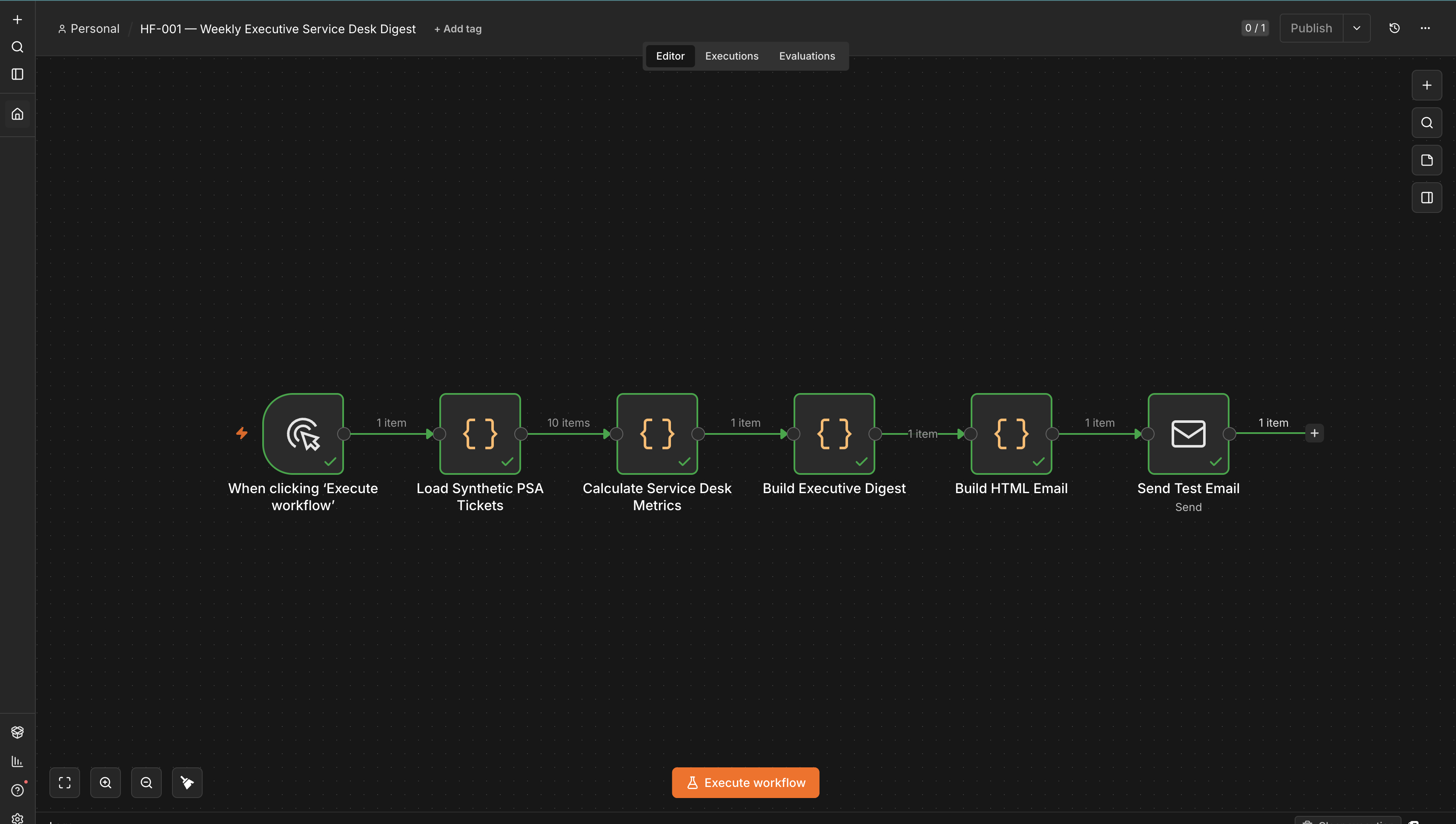
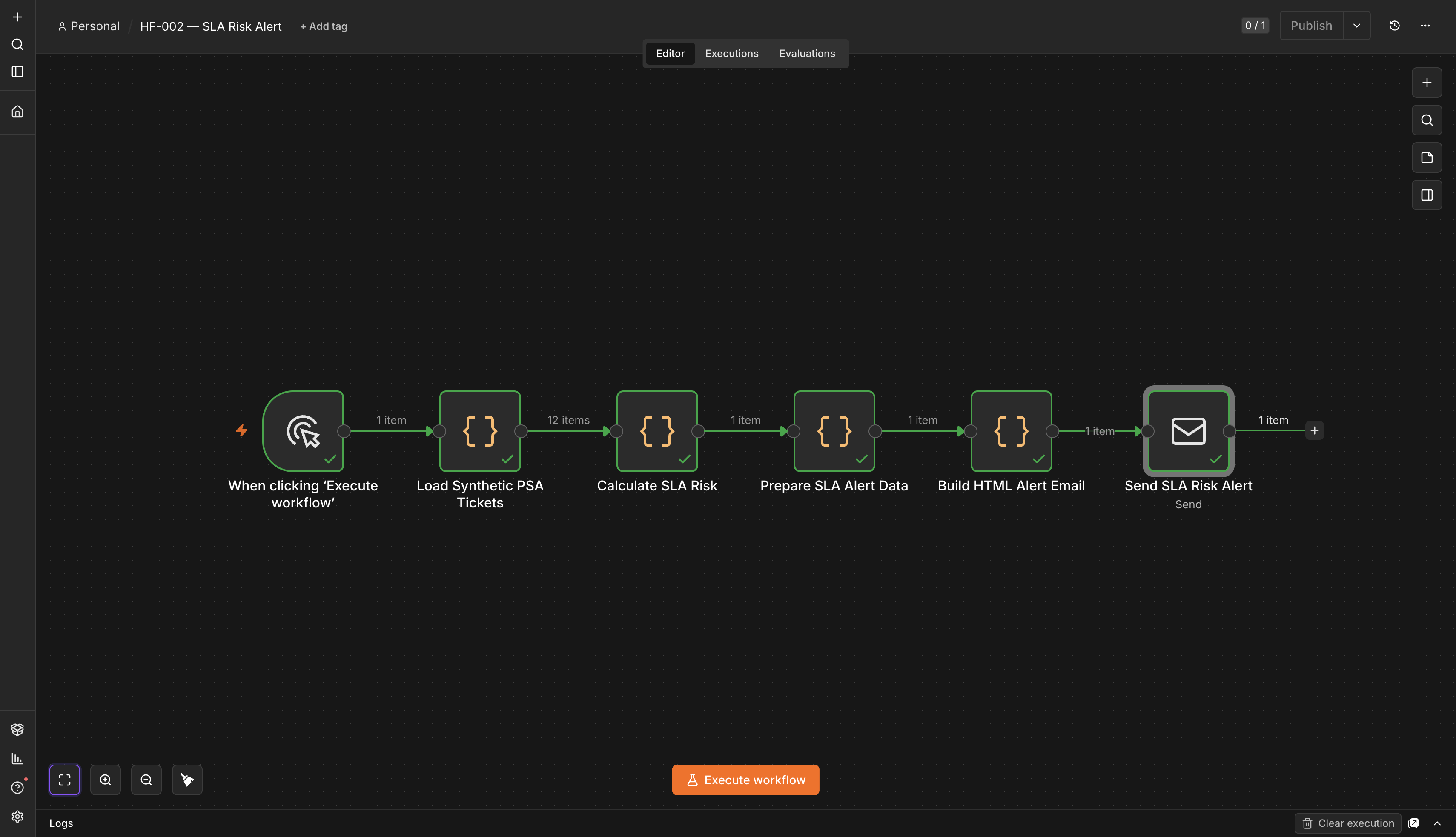
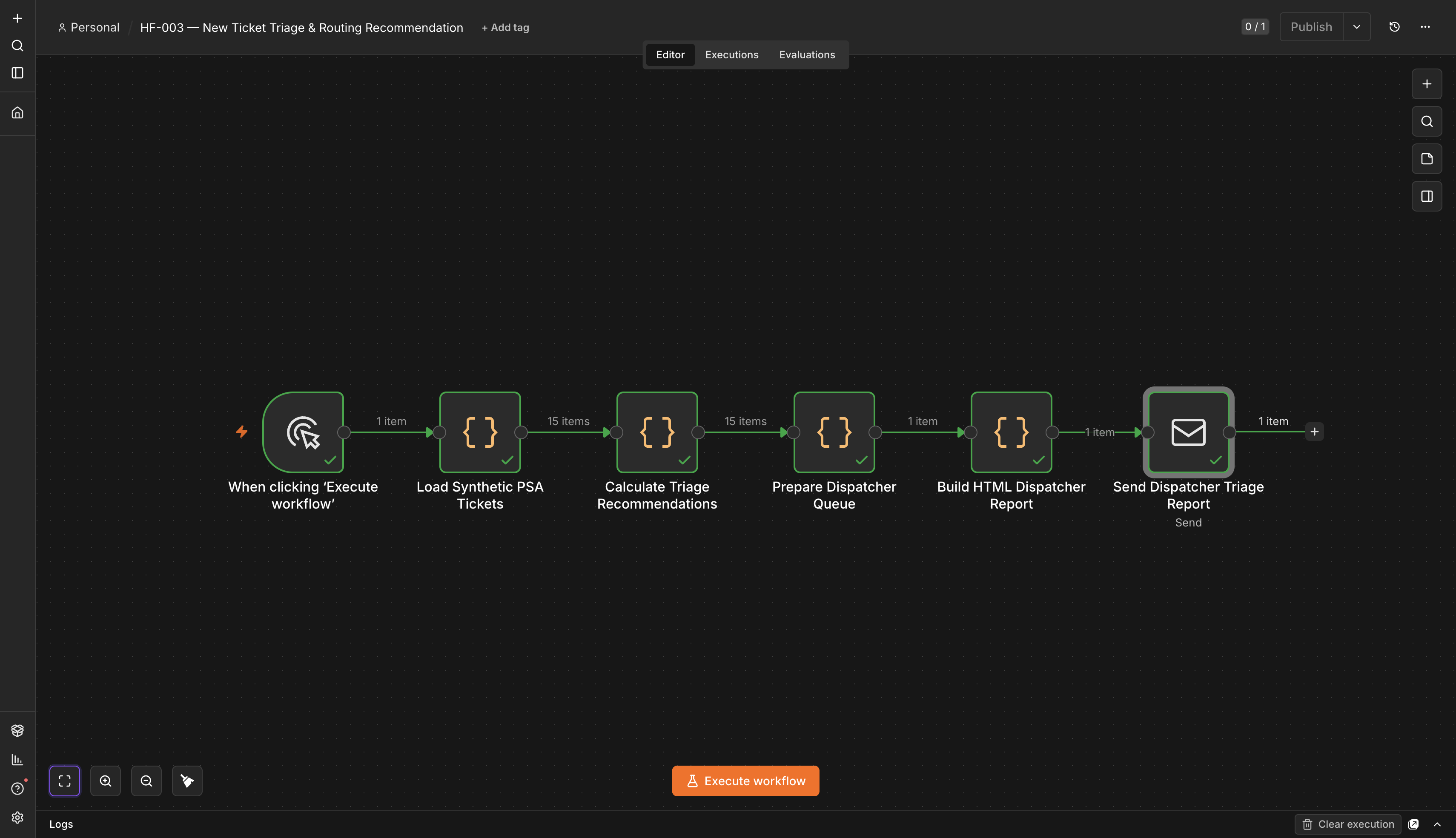
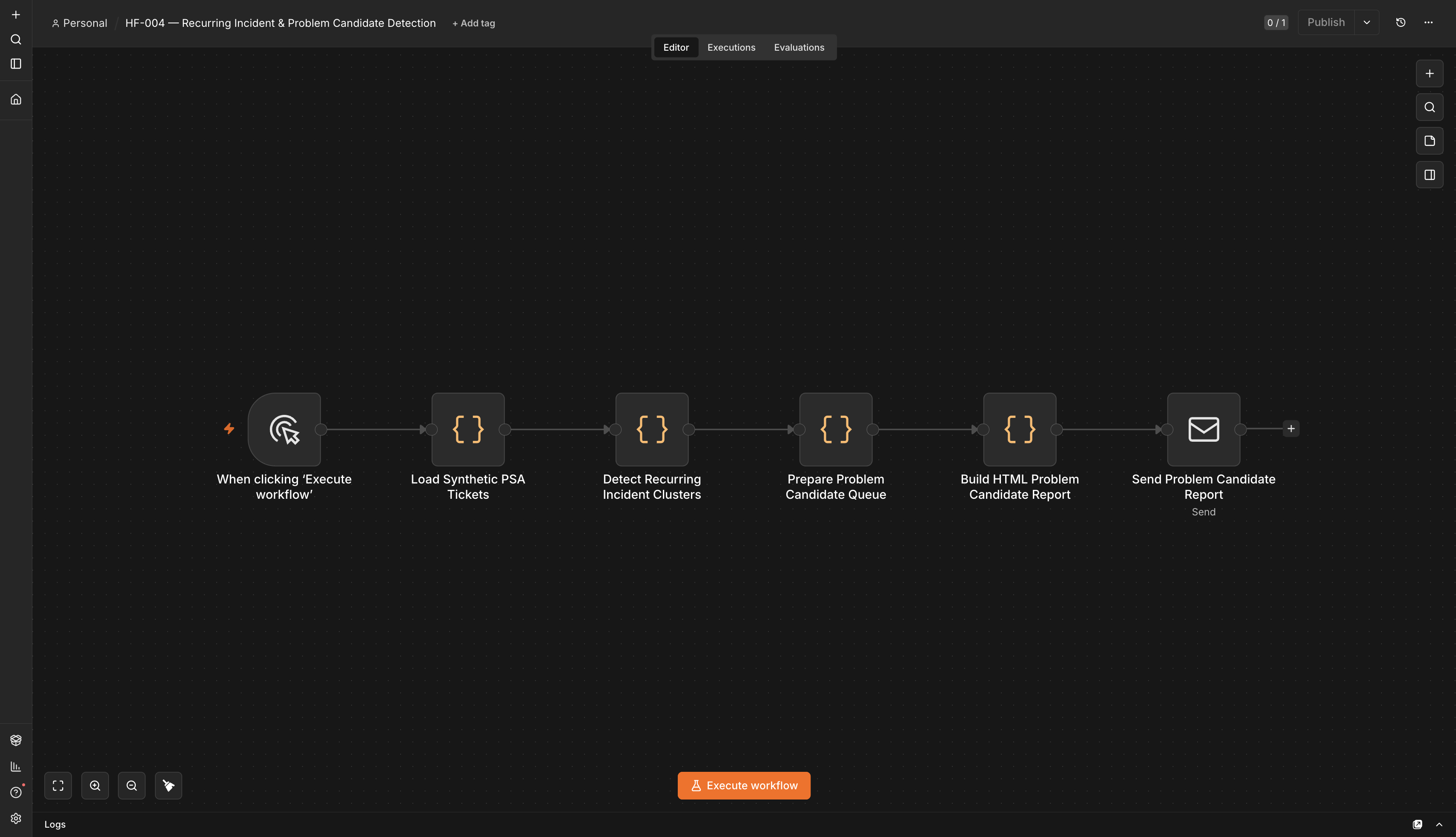
MSP Automations · MSP-001–MSP-034 · 34 Validated Workflows
Improve the operating system without replacing it.
MSP Automations helps managed service providers reduce repetitive work, improve operational visibility and make important workflows more consistent. The model focuses on auditing and improving the MSP’s existing PSA, RMM, Microsoft and vendor environment rather than forcing another operational platform into the stack.
The Business
MSP Automations helps MSPs audit, design, implement and maintain automation around the systems and tools they already use.
The model is based on implementation, customization, integration and managed automation services—not a standalone SaaS product.
Understand the operating workflow.
Review existing processes, tools, responsibilities, exceptions and repeated manual work before proposing automation.
Define decisions and safeguards.
Separate deterministic business rules from AI-assisted work and identify where human approval is required.
Connect the tools already in use.
Build workflows around PSA, RMM, Microsoft 365, reporting and communication systems instead of replacing the client’s stack.
Monitor, maintain and improve.
Review failures, changing APIs, operational feedback and new automation opportunities after implementation.
What MSP Automations Does
Workflow Audits
Identify repetitive work, slow handoffs, reporting gaps, SLA risk and processes that rely too heavily on individual memory.
Implementation
Build production-ready workflows using appropriate low-code, API-based and custom automation components.
Integration
Connect PSA, RMM, Microsoft 365, email, reporting and internal operations without introducing unnecessary platform replacement.
Managed Automation
Maintain workflows, review failures, update integrations and continue improving the operating system over time.
Business Decision
Service-led instead of SaaS-led.
MSPs already operate across established PSA, RMM, Microsoft and vendor systems. MSP Automations is designed to improve those systems through audits, integrations, implementation and ongoing automation work rather than asking teams to replace a functioning stack.
What It Demonstrates
Operational thinking beyond individual workflows.
The 34-workflow library demonstrates service design, business-rule modelling, workflow architecture, safe integration planning, deterministic validation and the ability to translate operational problems into reusable systems.